


Experts debate proposed 'big brother' medical council
The Obama administration is touting a provocative proposal to give a medical advisory council the power to help decide the scope of coverage that would be eligible for reimbursement under Medicare.
Administration officials say the proposed council would improve health care quality and control costs. But some health care industry groups object to the proposal, saying such a council would not be qualified to make those judgments.
This council would consist of doctors and health care experts who make recommendations based on extensive data and analysis of best health care practices, according to administration officials.
Proponents believe the approach would improve care and eliminate some wasteful spending by doctors who are now paid separately for each visit and procedure they authorize. Instead, this council could recommend, for example, a comprehensive approach to treat a patient with chronic heart condition or high cholesterol.
The administration says that by encouraging doctors to follow this type of plan, the government will save money by cutting unnecessary treatments and procedures. The council's recommendations would then go to the commission overseeing Medicare to determine the specific procedures and the actual reimbursement amount.
"It is not an exercise in just cutting reimbursement rates. In fact, in some cases, we may need higher reimbursement rates for certain aspects," President Obama said at a town hall meeting in Shaker Heights, Ohio, on Thursday.
The members of the proposed Independent Medicare Advisory Council would study different procedures and make recommendations.
Administration officials though say this council will not make decisions about what coverage a patient gets.
Still, opponents view this proposal as "big brother" dictating medical treatment.
The conservative Heritage Foundation describes the initiative as being "the equivalent of a federal health board determining how health care was rationed for all seniors."
The administration counters that doctors still will have flexibility to decide the best course of treatment depending on the individual patient but would be guided to a preferred course of action.
Doctors would have a set amount of money, or "bundle," to deal with each patient's problem instead of receiving money for each visit, test and procedure performed. Patients still would have the option of paying for more expensive procedures but would have to pick up the costs above what is deemed reimbursable by Medicare.
"Right now, if a hospital is reimbursed for the number of tests that it does, then that may not give them much of an incentive to make their system more efficient so that, once you take that first test and you've gone in the hospital, then you end up having that test sent around to everybody so you don't have to take five more tests," Obama told the Ohio audience.
Kevin Bohn and Jessica Yellin
CNN
Read Entire Article
12,000 U.S. Children To Be Swine Flu Vaccine Guinea Pigs
Around 12,000 U.S. children will be used as guinea pigs for an experimental swine flu vaccine known to contain the dangerous ingredient squalene, which has been directly linked with cases of Gulf War Syndrome and a host of other debilitating diseases.
According to a report in the Oklahoman, 12,000 children nationwide will partake in “fast-tracked studies” to test the side-effects of the untested swine flu vaccine in trials set to begin next month.
“The trials will test the vaccine’s effectiveness and whether or not it has negative side effects in patients,” states the report.
Since less than 100 children in the U.S. die from regular seasonal flu each year, a reasonable estimate would be that around 100 children will die from swine flu over the course of the next year.
So in effect, the authorities will vaccinate millions of children in order to try and prevent 100 deaths. If the mass vaccination program mirrors the previous swine flu outbreak of 1976 then the vaccine is likely to kill more people than the actual virus.
Furthermore, since the swine flu vaccine includes squalene, a dangerous adjuvant that contributed to Gulf War Syndrome cases, there’s little doubt that it will lead to debilitating lifelong diseases far more deadly than the swine flu virus itself for thousands of children if a mass vaccination campaign is conducted.
According to Meryl Nass, M.D., “A novel feature of the two H1N1 vaccines being developed by companies Novartis and GlaxoSmithKline is the addition of squalene-containing adjuvants to boost immunogenicity and dramatically reduce the amount of viral antigen needed. This translates to much faster production of desired vaccine quantities.”
“Research shows that squalene is the experimental anthrax vaccine ingredient that caused devastating autoimmune diseases and deaths for many Gulf War veterans from the US, UK, and Australia, yet it continues in use today and for new vaccines development in labs,” writes Stephen Lendman.
According to award-winning investigative journalist Gary Matsumoto, there’s a “close match between the squalene-induced diseases in animals and those observed in humans injected with this oil: rheumatoid arthritis, multiple sclerosis and systemic lupus erythematosus.”
“There are now data in more than two dozen peer-reviewed scientific papers, from ten different laboratories in the US, Europe, Asia and Australia, documenting that squalene-based adjuvants can induce autoimmune diseases in animals…observed in mice, rats, guinea pigs and rabbits. Sweden’s Karolinska Institute has demonstrated that squalene alone can induce the animal version of rheumatoid arthritis. The Polish Academy of Sciences has shown that in animals, squalene alone can produce catastrophic injury to the nervous system and the brain. The University of Florida Medical School has shown that in animals, squalene alone can induce production of antibodies specifically associated with systemic lupus erythematosus,” writes Matsumoto.
Micropaleontologist Dr. Viera Scheibner, who conducted research into the adverse effects of adjuvants in vaccines, wrote the following about squalene.
Squalene “contributed to the cascade of reactions called “Gulf War syndrome. (GIs developed) arthritis, fibromyalgia, lymphadenopathy, rashes, photosensitive rashes, malar rashes, chronic fatigue, chronic headaches, abnormal body hair loss, non-healing skin lesions, aphthous ulcers, dizziness, weakness, memory loss, seizures, mood changes, neuropsychiatric problems, anti-thyroid effects, anaemia, elevated ESR (erythrocyte sedimentation rate), systemic lupus erythematosus, multiple sclerosis, ALS, Raynaud’s phenomenon, Sjorgren’s syndrome, chronic diarrhea, night sweats and low-grade fever.”
Paul Joseph Watson
Infowars
Read Entire Article
ISP Pulls Plug On File Sharing Customers
Internet service provider (ISP) Karoo, based in Hull, has changed its policy of suspending the service of users suspected of copyright violations.
The about face was made following a BBC story outlining the firm's practice.
Karoo issued a statement on Friday, saying that it has been "exceeding the expectations of copyright owners".
The firm will now adopt a "three strikes" rule, in which suspected file-sharers will receive three written warnings before action is taken.
"We have always taken a firm line on the alleged abuse of our internet connections," said Nick Thompson, director of consumer and publishing services, in the statement.
"However, we continually review our policies and procedures to reflect own customers' changing needs and evolving use of the internet.
"It is evident that we have been exceeding the expectations of copyright owners, the media and internet users. So, we have changed our policy to move in more line with the industry standard approach."
'Totally unfair'
Karoo - the only ISP in the area, which has no BT lines - long held a policy of suspending service of suspected file-sharers. In order to get their service restored, customers had to sign a document promising not to repeat the offence.
The firm's approach is more aligned with many other ISPs' approaches to suspected file sharers, mirroring the "three strikes" rule that the music industry itself has called for.
Andrea Robinson, a Karoo customer from Willerby, told the BBC that a day after her service was cut off, she received a letter from the firm claiming that she had been using the peer-to-peer file-sharing service BitTorrent to download the film Terminator Salvation.
BBC
Read Entire Article
Upcoming Military Robot Could Feed on Dead Bodies
It could be a combination of 19th-century mechanics, 21st-century technology — and a 20th-century horror movie.
A Maryland company under contract to the Pentagon is working on a steam-powered robot that would fuel itself by gobbling up whatever organic material it can find — grass, wood, old furniture, even dead bodies.
Robotic Technology Inc.'s Energetically Autonomous Tactical Robot — that's right, "EATR" — "can find, ingest, and extract energy from biomass in the environment (and other organically-based energy sources), as well as use conventional and alternative fuels (such as gasoline, heavy fuel, kerosene, diesel, propane, coal, cooking oil, and solar) when suitable," reads the company's Web site.
That "biomass" and "other organically-based energy sources" wouldn't necessarily be limited to plant material — animal and human corpses contain plenty of energy, and they'd be plentiful in a war zone.
EATR will be powered by the Waste Heat Engine developed by Cyclone Power Technology of Pompano Beach, Fla., which uses an "external combustion chamber" burning up fuel to heat up water in a closed loop, generating electricity.
The advantages to the military are that the robot would be extremely flexible in fuel sources and could roam on its own for months, even years, without having to be refueled or serviced.
Upon the EATR platform, the Pentagon could build all sorts of things — a transport, an ambulance, a communications center, even a mobile gunship.
In press materials, Robotic Technology presents EATR as an essentially benign artificial creature that fills its belly through "foraging," despite the obvious military purpose.
Fox News
U.S. orders $690M in swine-flu vaccine
The federal government is committing more than $800 million to buy more of the two key ingredients to make the H1N1 swine flu vaccine, according to the Department of Health and Human Services.
The money will be used to place additional orders on existing contracts with vaccine manufacturers including GlaxoSmithKline and Novartis. The former Chiron Corp. facility in Emeryville is now owned by Novartis, which makes vaccines there.
The government is placing orders for antigen and adjuvant. Antigen is the active ingredient in a vaccine that triggers the immune system to develop antibodies to fight the H1N1 virus. Adjuvant is added to boost the immune system and reduce the amount of antigen needed for the vaccine. The vaccine ingredients will become a part of the pandemic stockpile, for use if a vaccination campaign is necessary.
Frank VinluanSan Francisco Business Times
Read entire article
Attacks on U.S., Korea sites came from U.K.
The denial-of-service attacks launched on Web sites in South Korea and the United States earlier this month appear to have come from a master server in the United Kingdom, according to security researchers in Vietnam.
The master server controls all of the eight command and control servers involved in the series of distributed denial-of-service attacks that started on the July 4 weekend, security firm Bkis said in a blog posting on its Web site on Monday. Bkis said it gained control of two of the servers.
The Vietnamese firm estimated the number of compromised PCs involved in the attacks to be around 167,000 in 74 countries.
Botnet expert Joe Stewart of SecureWorks told CNET News that that number sounded high. Security experts had been estimating that there were 50,000 infected PCs in the botnet.
The attacks targeted dozens of government and commercial sites in the U.S. and South Korea, causing temporary outages at many of them.
Code on the compromised PCs was set to erase or overwrite data late last week but researchers in the U.S. were not aware of any reports of that happening.
Cnet
NSA’s cyber overkill
Cyber security is a real issue, as evidenced by the virus behind July 4 cyber attacks that hobbled government and business websites in the United States and South Korea. It originated from Internet provider addresses in 16 countries and targeted, among others, the White House and the New York Stock Exchange.
Unfortunately, the Obama administration has chosen to combat it in a move that runs counter to its pledge to be transparent. The administration reportedly is proceeding with a Bush-era plan to use the National Security Agency to screen government computer traffic on private-sector networks. AT&T is slated to be the likely test site. This classified pilot program, dubbed "Einstein 3," is developed but not yet rolled out. It takes two offenders from President Bush's contentious secret surveillance program and puts them in charge of scrutinizing all Internet traffic going to or from federal government agencies.
Einstein 3 purportedly is meant to protect government networks from hackers. But cyber-security experts -- such as Babak Pasdar, who blew the whistle on a mysterious "Quantico Circuit" while working for a major service provider -- agree that Einstein 3 offers no intrinsic security value. The program is implemented where servers exchange traffic between one another -- in the heart of a network system rather than at the perimeter, which interfaces with the outside world. This is similar to a home security system that only monitors the central interior of a house, rather than keeping an eye on the actual doors (and the purpose of hackers may simply be to enter).
Furthermore, Einstein 3 focuses on collecting, processing and analyzing all person-to-person communications content rather than looking for hacker and malicious software attack patterns directed at government sites and installations -- which should raise eyebrows.
Jesselyn Radack
Lost Angeles Times
Read Entire Article
Snooping through the power socket
Power sockets can be used to eavesdrop on what people type on a computer.
Security researchers found that poor shielding on some keyboard cables means useful data can be leaked about each character typed.
By analysing the information leaking onto power circuits, the researchers could see what a target was typing.
The attack has been demonstrated to work at a distance of up to 15m, but refinement may mean it could work over much longer distances.
Hotel attack
"Our goal is to show that information leaks in the most unexpected ways and can be retrieved," wrote Andrea Barisani and Daniele Bianco, of security firm Inverse Path, in a paper describing their work.
The research focused on the cables used to connect PS/2 keyboards to desktop PCs.
Usefully, said the pair, the six wires inside a PS/2 cable are typically "close to each other and poorly shielded". This means that information travelling along the data wire, when a key is pressed, leaks onto the earth (ground in the US) wire in the same cable.
The earth wire, via the PC's power unit, ultimately connects to the plug in the power socket, and from there information leaks out onto the circuit supplying electricity to a room.
Even better, said the researchers, data travels along PS/2 cables one bit at a time and uses a clock speed far lower than any other PC component. Both these qualities make it easy to pick out voltage changes caused by key presses.
A digital oscilloscope was used to gather data about voltage changes on a power line and filters were used to remove those caused by anything other than the keyboard.
"The PS/2 signal square wave is preserved with good quality... and can be decoded back to the original keystroke information," wrote the pair in a paper describing their work.
They demonstrated it working over distances of 1, 5, 10 and 15m from a target, far enough to suggest it could work in a hotel or office.
"The test performed in the laboratory represent a worst case scenario for this type of measurement, which along with acceptable results emphasizes the feasibility of the attack on normal conditions," they added.
The pair said their research was "work in progress" and expect the equipment to get more sensitive as it is refined.
The attack is due to be demonstrated at the Black Hat conference that takes place in Las Vegas from 25-30 July.
BBC

Rockefeller Foundation: Climate change ‘will cause civilization to collapse’
An effort on the scale of the Apollo mission that sent men to the Moon is needed if humanity is to have a fighting chance of surviving the ravages of climate change. The stakes are high, as, without sustainable growth, “billions of people will be condemned to poverty and much of civilisation will collapse”.
This is the stark warning from the biggest single report to look at the future of the planet – obtained by The Independent on Sunday ahead of its official publication next month. Backed by a diverse range of leading organisations such as Unesco, the World Bank, the US army and the Rockefeller Foundation, the 2009 State of the Future report runs to 6,700 pages and draws on contributions from 2,700 experts around the globe. Its findings are described by Ban Ki-moon, Secretary-General of the UN, as providing “invaluable insights into the future for the United Nations, its member states, and civil society”.
The impact of the global recession is a key theme, with researchers warning that global clean energy, food availability, poverty and the growth of democracy around the world are at “risk of getting worse due to the recession”. The report adds: “Too many greedy and deceitful decisions led to a world recession and demonstrated the international interdependence of economics and ethics.”
Although the future has been looking better for most of the world over the past 20 years, the global recession has lowered the State of the Future Index for the next 10 years. Half the world could face violence and unrest due to severe unemployment combined with scarce water, food and energy supplies and the cumulative effects of climate change.
And the authors of the report, produced by the Millennium Project – a think-tank formerly part of the World Federation of the United Nations Associations – set out a number of emerging environmental security issues. "The scope and scale of the future effects of climate change – ranging from changes in weather patterns to loss of livelihoods and disappearing states – has unprecedented implications for political and social stability."
The Independent
Jonathan Owen
Read Entire Article
DARPA plans to end swine flu using Triffid drugs
Crazed US military boffins, their plans for the eradication of humanity in a machine-rebellion bloodbath at a stand, have adopted an alternative strategy. They plan now to develop a “plant-based production system”, ostensibly for the harvest of valuable products beneficial to humanity – but which seems certain to unleash a terrifying unforeseen Triffid-like vegetable horror upon suffering humanity.
The crazed boffins in question, it seems needless to say, are those of DARPA, the famous Defence Advanced Research Projects Agency. It’s important to remember that very few of DARPA’s ambitious plans – which often involve a significant risk of wiping out the human race – ever come to anything. But they only have to be (un)lucky once.
In this case, the federal warboffins appear to be motivated by the ongoing swine flu outbreak. They say (Word doc):
The 2009 H1N1 swine flu pandemic has highlighted the national need for larger scale vaccine manufacturing capabilities … Recent advances funded by DARPA and others have demonstrated the viability of plant-based protein expression technologies for the production and purification of cGMP-compliant medical countermeasures …Requested are approaches that demonstrate a proof-of-concept facility capable of growing adequate plant biomass for the production of protein … Emphasis should be placed on infrastructure requirements and design, as well as equipment needed for the growth, processing, purification and validation of products …
It won’t have escaped readers of John Wyndham’s dystopian classic The Day of the Triffids that there are some parallels here. The eponymous shuffling vegetable assassins of the book were theorised to have arisen as “the outcome of a series of ingenious biological meddlings – and very likely accidental, at that”, most probably by secret government labs in Russia. In the book, large-scale cultivation and processing of Triffids began because “the extracts they give were very valuable in the circumstances”.
Just as rapidly-produced vaccines could be in an age of global pandemics, in fact. Open and shut case.

Lewis Page
The Register
Read Entire Article
The next hacking frontier: Your brain?
Hackers who commandeer your computer are bad enough. Now scientists worry that someday, they'll try to take over your brain.
the past year, researchers have developed technology that makes it possible to use thoughts to operate a computer, maneuver a wheelchair or even use Twitter -- all without lifting a finger. But as neural devices become more complicated, and go wireless, some scientists say the risks of "brain hacking" should be taken seriously.
"Neural devices are innovating at an extremely rapid rate and hold tremendous promise for the future," said computer security expert Tadayoshi Kohno of the University of Washington.
"But if we don't start paying attention to security, we're worried that we might find ourselves in five or 10 years saying we've made a big mistake."
Hackers tap into personal computers all the time. But what would happen if they focused their nefarious energy on neural devices, such as the deep-brain stimulators used to treat Parkinson's and depression, or electrode systems for controlling prosthetic limbs?
According to Kohno and his colleagues, who published their concerns July 1 in Neurosurgical Focus, most devices carry few security risks. But as neural engineering becomes more complex and more widespread, the potential for security breaches will mushroom.
"It's very hard to design complex systems that don't have bugs," Kohno said. "As these medical devices start to become more and more complicated, it gets easier and easier for people to overlook a bug that could become a very serious risk. It might border on science fiction today, but so did going to the moon 50 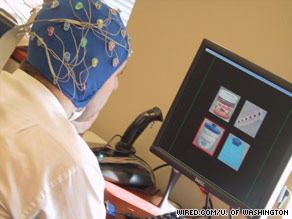
Some might question why anyone would want to hack into someone else's brain, but the researchers say there's a precedent for using computers to cause neurological harm. In November 2007 and March 2008, malicious programmers vandalized epilepsy support Web sites by putting up flashing animations, which caused seizures in some photo-sensitive patients.
"It happened on two separate occasions," said computer science graduate student Tamara Denning, a co-author on the paper. "It's evidence that people will be malicious and try to compromise peoples' health using computers, especially if neural devices become more widespread."
In some cases, patients might even want to hack into their own neural device. Unlike devices to control prosthetic limbs, which still use wires, many deep brain stimulators already rely on wireless signals. Hacking into these devices could enable patients to "self-prescribe" elevated moods or pain relief by increasing the activity of the brain's reward centers.
Despite the risks, Kohno said, most new devices aren't created with security in mind. Neural engineers carefully consider the safety and reliability of new equipment, and neuroethicists focus on whether a new device fits ethical guidelines. But until now, few groups have considered how neural devices might be hijacked to perform unintended actions. This is the first time an academic paper has addressed the topic of "neurosecurity," a term the group coined to describe their field.
Wired
Read Entire Article
Greening the Internet: How much CO2 does this article produce?
Twenty milligrams; that's the average amount of carbon emissions generated from the time it took you to read the first two words of this article.
Now, depending on how quickly you read, around 80, perhaps even 100 milligrams of C02 have been released. And in the several minutes it will take you to get to the end of this story, the number of milligrams of greenhouse gas emitted could be several thousand, if not more.
This may not seem like a lot: "But in aggregate, if you consider all the people visiting a web site and then all the seconds that each of them spends on it, it turns out to be a large number," says Dr. Alexander Wissner-Gross, an Environmental Fellow at Harvard University who studies the environmental impact of computing.
Wissner-Gross estimates every second someone spends browsing a simple web site generates roughly 20 milligrams of C02. Whether downloading a song, sending an email or streaming a video, almost every single activity that takes place in the virtual environment has an impact on the real one.
As millions more go online each year some researchers say the need to create a green Internet ecosystem is not only imperative but also urgent.
"It is part of the whole sustainability picture," Chris Large, head of research and development at UK-based Climate Action Group, told CNN.
"Scientists are saying to us that we have 10 years to take some serious action to avoid the most catastrophic effects of climate change so taking some sort of initiative is absolutely vital."
A number of studies have highlighted the growing energy demands of computers. A 2007 report from research firm Gartner, for example, estimates the manufacturing, use and disposal of information and communications technology generates about two percent of the world's greenhouse gases -- similar to the level produced by the entire aviation industry.
Anti-virus software firm McAfee reports that the electricity needed just to transmit the trillions of spam emails sent annually equals the amount required to power over two million homes in the United States while producing the same level of greenhouse gas emissions as more than three million cars.
"Most people don't appreciate that the computer on your desk is contributing to global warming and that if its electricity comes from a coal power plant it produces as much C02 as a sports utility vehicle," said Bill St. Arnaud of Canarie, a Canada-based internet development organization.
"Some studies estimate the internet will be producing 20 percent of the world's greenhouse gases in a decade. That is clearly the wrong direction. That is clearly unsustainable," added St. Arnaud.
What do you include when working out IT's carbon footprint?
Calculating the carbon footprint of the entire web however is not as easy as measuring the greenhouse gas emissions of a car.
Data centers -- massive buildings housing hundreds, if not thousands, of power hungry servers storing everything from Facebook photos and YouTube videos to company web sites and personal emails -- are often labeled as the worst offenders when it comes to harming the environment.
In 2002, global data center emissions amounted to 76 million tons of carbon dioxide -- a figure that is likely to more than triple over the next decade, according to a 2008 study by the Climate Group and Global e-Sustainability Initiative (GeSI).
Lara Farrar
CNN
Read Entire Article
Report: Domestic surveillance program relied on flawed analysis
The highly controversial no-warrant surveillance program initiated after the September 11 terrorist attacks relied on a "factually flawed" legal analysis inappropriately provided by a single Justice Department official, according to a report to Congress on Friday.
The report was compiled by the inspectors general of the nation's top intelligence agencies, the Pentagon and the Justice Department.
The report, mandated by Congress, provides fresh context to information previously leaked in press accounts and buttressed by both congressional testimony and books written by former officials involved in the surveillance effort.
The 38-page unclassified version of the document reaches a cautious conclusion, stating that any use of the information collected under the surveillance program "should be carefully monitored."
The program, launched by President Bush in the weeks after the September 11 attacks, allowed for -- without court approval -- the interception of communications into and out of the United States if there was a "reasonable basis" that one of the parties was a terrorist.
The report, though not critical of the program's objectives, sharply criticizes the legal advice provided to the White House by the Justice Department.
Among other things, the report cites a Justice Department conclusion that "it was extraordinary and inappropriate that a single DOJ attorney, John Yoo, was relied upon to conduct the initial legal assessment" of the surveillance program.
"The lack of oversight and review of Yoo's work ... contributed to a legal analysis of the [program] that at a minimum was factually flawed," it says.
The report says Yoo largely circumvented both his boss, Assistant Attorney General Jay Bybee, and Attorney General John Ashcroft.
Yoo, described by Bybee in the report as "the White House's guy" on national security, also provided the legal justification for the CIA's controversial harsh interrogation program. Yoo's legal rationale was later repudiated by the Justice Department.
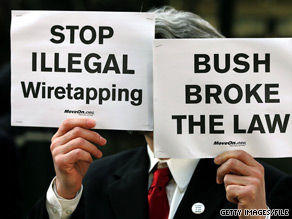
The bitter debate within the Justice Department over the legal basis for the warrantless surveillance and related intelligence efforts is highlighted in references to the much-documented dramatic account of a March 2004 confrontation in Ashcroft's hospital room. Deputy Attorney General James Comey defied then-White House Counsel Alberto Gonzales by refusing to sign off on the reauthorization of the program.
The report notes that several members of Congress -- including then-House Intelligence Committee Chairwoman Nancy Pelosi -- were briefed on the program on October 25, 2001, and a total of 17 times before the program became public in 2005.
The document repeats the public assertion by former National Security Agency Director Michael Hayden that no member of Congress had urged that the program be stopped.
The new report makes clear that the President's Surveillance Program was only a small part of the counterterrorism intelligence efforts in the aftermath of the September 11 attacks, and its impact even today remains unclear.
Most of the intelligence officials interviewed by the inspectors general had, according to the report, "difficulty citing specific instances where PSP reporting had directly contributed to counterterrorism successes."
The report was compiled by inspectors general of five agencies despite the apparent refusal by key figures -- including Yoo, former Attorney General John Ashcroft and former CIA Director George Tenet -- to be interviewed by investigators.
Those who consented to be interviewed by the investigators included Hayden, former Director of National Intelligence John Negroponte, former White House Counsel and Attorney General Gonzales, FBI Director Robert Mueller and former Secretary of Defense Donald Rumsfeld.Pam Benson and Terry Frieden
WASHINGTON (CNN)
Call for limits on web snooping
Governments and companies should limit the snooping they do on web users.
So said Sir Tim Berners-Lee, inventor of the world wide web, who said that growing oversight of browsing could have a pernicious effect.
A greater part of the value of the web lay in the lack of constraints on what people could do with it.
He also warned that attempts to censor what people could say or what they could do online were ultimately doomed to failure.
Open triumph
"When you use the internet it is important that the medium should not be set up with constraints," he said.
The internet, said Sir Tim, should be like a blank piece of paper. Just as governments and companies cannot police what people write or draw on that sheet of paper so they should not be restricted from putting the web to their own uses.
"The canvas should be blank," he said
While governments do need some powers to police unacceptable uses of the web; limits should be placed on these powers, he said.

Repressive regimes, such as China and Iran, that work hard to limit what people can do online would struggle to maintain that control over time, he said.
"The trend over the years is that the internet in the end goes around censorship and openness eventually triumphs," he said. "But it is by no means an easy road."
Sir Tim made his comments during a speech at an event that helped to launch the BBC Two series Digital Revolution.
The four-part series aims to explore the history of the World Wide Web and generate debate about how it is changing the way people live their lives. It aims to debate how the web is changing the nation state, how it affects identity, freedom and anonymity.
Over the next eight months as the programme is being produced, viewers will be encouraged to get involved by sending in questions for interview subjects and being able to produce their own clips using the rushes generated during filming.
Social media researcher and broadcaster Aleks Krotoski will present the series of programmes.
BBC
Rail staff face 'smile police'
A Japanese rail firm has introduced a system to check that staff are smiling enough at all times.
Computerised scanners around 15 Tokyo stations will measure the smile's curvature to ensure it is broad enough.
Those failing to measure up - literally - will be advised to look less serious and more cheerful.
The system will also be introduced at a hospital in Osaka to check staff friendliness and at a truck stop to measure the tiredness of drivers.
The BBC's Roland Buerk, in Tokyo, says that the Japanese highly value customer service.
It is standard practice, our correspondent explains, for smartly-dressed train conductors to bow as customers enter and leave train carriages.
The software has been developed by Japanese firm Omron.
They suggests that future applications may include shops - where they could be positioned to measure the reaction of customers to products on display.
BBC
Gore: U.S. Climate Bill Will Help Bring About ‘Global Governance’
Former Vice President Al Gore declared that the Congressional climate bill will help bring about “global governance.”
“I bring you good news from the U.S., “Gore said on July 7, 2009 in Oxford at the Smith School World Forum on Enterprise and the Environment, sponsored by UK Times.
“Just two weeks ago, the House of Representatives passed the Waxman-Markey climate bill,” Gore said, noting it was “very much a step in the right direction.” President Obama has pushed for the passage of the bill in the Senate and attended a G8 summit this week where he agreed to attempt to keep the Earth’s temperatures from rising more than 2 degrees C.
Gore touted the Congressional climate bill, claiming it “will dramatically increase the prospects for success” in combating what he sees as the “crisis” of man-made global warming.
“But it is the awareness itself that will drive the change and one of the ways it will drive the change is through global governance and global agreements.” (Editor’s Note: Gore makes the “global governance” comment at the 1min. 10 sec. mark in this UK Times video.)
Gore’s call for “global governance” echoes former French President Jacques Chirac’s call in 2000.
On November 20, 2000, then French President Chirac said during a speech at The Hague that the UN’s Kyoto Protocol represented “the first component of an authentic global governance.”
“For the first time, humanity is instituting a genuine instrument of global governance,” Chirac explained. “From the very earliest age, we should make environmental awareness a major theme of education and a major theme of political debate, until respect for the environment comes to be as fundamental as safeguarding our rights and freedoms. By acting together, by building this unprecedented instrument, the first component of an authentic global governance, we are working for dialogue and peace,” Chirac added.
Former EU Environment Minister Margot Wallstrom said, “Kyoto is about the economy, about leveling the playing field for big businesses worldwide.” Canadian Prime Minster Stephen Harper once dismissed UN’s Kyoto Protocol as a “socialist scheme.”
‘Global Carbon Tax’ Urged at UN Meeting
In addition, calls for a global carbon tax have been urged at recent UN global warming conferences. In December 2007, the UN climate conference in Bali, urged the adoption of a global carbon tax that would represent “a global burden sharing system, fair, with solidarity, and legally binding to all nations.”
“Finally someone will pay for these [climate related] costs,” Othmar Schwank, a global tax advocate, said at the 2007 UN conference after a panel titled “A Global CO2 Tax.”
Schwank noted that wealthy nations like the U.S. would bear the biggest burden based on the “polluters pay principle.” The U.S. and other wealthy nations need to “contribute significantly more to this global fund,” Schwank explained. He also added, “It is very essential to tax coal.”The 2007 UN conference was presented with a report from the Swiss Federal Office for the Environment titled “Global Solidarity in Financing Adaptation.” The report stated there was an “urgent need” for a global tax in order for “damages [from climate change] to be kept from growing to truly catastrophic levels, especially in vulnerable countries of the developing world.”
The tens of billions of dollars per year generated by a global tax would “flow into a global Multilateral Adaptation Fund” to help nations cope with global warming, according to the report.
Schwank said a global carbon dioxide tax is an idea long overdue that is urgently needed to establish “a funding scheme which generates the resources required to address the dimension of challenge with regard to climate change costs.”
‘Redistribution of wealth’
The environmental group Friends of the Earth advocated the transfer of money from rich to poor nations during the 2007 UN climate conference.
“A climate change response must have at its heart a redistribution of wealth and resources,” said Emma Brindal, a climate justice campaigner coordinator for Friends of the Earth.
[Editor's Note: Many critics have often charged that proposed climate tax and regulatory “solutions” were more important to the promoters of man-made climate fears than the accuracy of their science. Former Colorado Senator Tim Wirth reportedly said, "We've got to ride the global warming issue. Even if the theory of global warming is wrong, we will be doing the right thing — in terms of economic policy and environmental policy."]
Climate DepotJohn Holdren, Obama’s Science Czar: Forced Abortions and Mass Sterilization Needed to Save the Planet
Forced abortions. Mass sterilization. A “Planetary Regime” with the power of life and death over American citizens.
The tyrannical fantasies of a madman? Or merely the opinions of the person now in control of science policy in the United States? Or both?
These ideas (among many other equally horrifying recommendations) were put forth by John Holdren, whom Barack Obama has recently appointed Director of the White House Office of Science and Technology Policy, Assistant to the President for Science and Technology, and Co-Chair of the President’s Council of Advisors on Science and Technology — informally known as the United States’ Science Czar. In a book Holdren co-authored in 1977, the man now firmly in control of science policy in this country wrote that:
* Women could be forced to abort their pregnancies, whether they wanted to or not;
* The population at large could be sterilized by infertility drugs intentionally put into the nation’s drinking water or in food;
* Single mothers and teen mothers should have their babies seized from them against their will and given away to other couples to raise;
* People who “contribute to social deterioration” (i.e. undesirables) “can be required by law to exercise reproductive responsibility” — in other words, be compelled to have abortions or be sterilized.
* A transnational “Planetary Regime” should assume control of the global economy and also dictate the most intimate details of Americans’ lives — using an armed international police force.
Impossible, you say? That must be an exaggeration or a hoax. No one in their right mind would say such things.
Well, I hate to break the news to you, but it is no hoax, no exaggeration. John Holdren really did say those things, and this report contains the proof. Below you will find photographs, scans, and transcriptions of pages in the book Ecoscience, co-authored in 1977 by John Holdren and his close colleagues Paul Ehrlich and Anne Ehrlich. The scans and photos are provided to supply conclusive evidence that the words attributed to Holdren are unaltered and accurately transcribed.

Of course, Holdren wrote these things in the framework of a book he co-authored about what he imagined at the time (late 1970s) was an apocalyptic crisis facing mankind: overpopulation. He felt extreme measures would be required to combat an extreme problem. Whether or not you think this provides him a valid “excuse” for having descended into a totalitarian fantasy is up to you: personally, I don’t think it’s a valid excuse at all, since the crisis he was in a panic over was mostly in his imagination. Totalitarian regimes and unhinged people almost always have what seems internally like a reasonable justification for actions which to the outside world seem incomprehensible.
Zombie Time BlogRead Entire Article
NSA Security running amok to plug leaks about 9/11
WMR has learned that the National Security ‘Q’ Group, responsible for security, has grown to an immense security and counter-intelligence force, with an estimated one thousand government employees, contractors, and paid informants. NSA’s Security force is reportedly primarily tasked with plugging any leaks of classified or other information that points to U.S. government’s involvement with the terrorist attacks on September 11, 2001.
featured stories NSA Security running amok to plug leaks about 9/11
The US government has allegedly set up a special security wing with the sole task of distancing Washington from any involvement in the 9/11 terrorist attacks.
NSA Security has doggedly pursued a number of NSA employees, some in ’sting’ operations, others in frequent polygraphs and repeated security interviews where threats are made by thuggish NSA security agents with and without the presence of FBI agents, and others in constant surveillance operations at their homes, churches, and other locations away from the Fort Meade, Maryland, headquarters of the agency.
The most egregious NSA Security operation against an NSA employee was the 2004 arrest of NSA analyst Ken Ford, Jr. Ford became a target of opportunity for NSA Security and the FBI after Vice President Dick Cheney noted his name on an NSA signals intelligence report on Saddam Hussein’s government that stated that there was no proof from interceptions of Iraqi communications that Saddam Hussein possessed ‘weapons of mass destruction.’
Cheney and other neocons in the Bush White House arranged for a ’sting’ operation to be mounted as retribution against Ford. Ford was charged with taking classified papers home from NSA headquarters, something that is quite impossible considering the stringent security in place at one of the most-secured complexes in the world.
NSA’s Security chief is Kemp Ensor III. Ensor has built up what amounts to a massive law enforcement and intelligence agency in Maryland that operates as a virtual independent operation that answers to no one. Maryland’s congressional delegation has shown little interest in oversight over the security operation.
In fact, WMR has learned that many NSA employees, aware of the political and other misuse of their agency by the Bush-Cheney administration, avidly backed Barack Obama for president hoping that the past era when NSA complied with the Foreign Intelligence Surveillance Act (FISA) and the Fourth Amendment of the Constitution would be restored. However, many NSA employees are bitterly disappointed that Obama has done nothing to curtail not only the widespread surveillance of the communications of law-abiding Americans but the constant ‘Stasi-like’ harassment and surveillance conducted by Ensor’s team of agents and confidential informants.
WMR has also learned that NSA Security has been authorized to work directly with Washington area local police department intelligence divisions to carry out its surveillance of not only NSA employees and contractors, but journalists who report on the activities of NSA. Two police departments mentioned in this respect are the Alexandria, Virginia, and Anne Arundel County, Maryland, sheriff departments.
One senior level NSA official recently found himself sitting in front of NSA Security questioners asking why he gave his NSA business cards to some students at a university. It turns out the official was trying to recruit students for NSA employment. When the official asked why there was a problem in his handing out his business cards, the answer by NSA Security was that some of them, all American citizens, had ‘Russian last names.’
Even former NSA employees and contractors are being subjected to continual NSA Security surveillance and harassment at their work places and other locations, according to WMR’s sources. Some have lost their jobs as a result of pressure from NSA Security.
WMR has in the past reported on NSA surveillance of journalists. On December 28, 2005, we reported: ‘WMR has learned that the National Security Agency (NSA), on the orders of the Bush administration, eavesdropped on the private conversations and e-mail of its own employees, employees of other U.S. intelligence agencies — including the CIA and DIA — and their contacts in the media, Congress, and oversight agencies and offices. The journalist surveillance program, code named ‘FIRSTFRUITS,’ was part of a Director of Central Intelligence (DCI) program that was maintained at least until October 2004 and was authorized by then-DCI Porter Goss. FIRSTFRUITS was authorized as part of a DCI ‘Countering Denial and Deception’ program responsible to an entity known as the Foreign Denial and Deception Committee (FDDC). Since the intelligence community’s reorganization, the DCI has been replaced by the Director of National Intelligence headed by John Negroponte and his deputy, former NSA director Gen. Michael Hayden.’
Since the revelation of the NSA journalist monitoring database, which later added communications intercepts of journalists’ phone calls, emails, and faxes to its database, NSA Security has, according to information received by WMR, conducted physical surveillance of journalists it deems to be threats to the operations of the agency. The top targeted journalists, who make up a virtual ‘rogues’ gallery’ at NSA Security, complete with photographs and other personal information, are: former Baltimore Sun and current Wall Street Journal reporter Siobhan Gorman, Washington Times reporter Bill Gertz, former Baltimore Sun and current New York Times reporter Scott Shane, Baltimore Sun reporter Phil McGowan, author James Bamford, New York Times reporters James Risen and Eric Lichtblau, and this editor, Wayne Madsen.
In addition to the aforementioned, FIRSTFRUITS also contained the names of former Washington Post reporter Vernon Loeb, New Yorker journalist Seymour Hersh, and UPI’s John C. K. Daly.
Ironically, NSA Security allegedly has its own connections in the news media. A Washington Times source revealed that the paper’s writer of the ‘Inside the Beltway’ column, John McCaslin, has a relative inside NSA Security — Robert McCaslin, the chief of NSA Security counter-intelligence and the chief ’sting’ agent against Ford. Robert McCaslin, according to the Times source, is the brother of the paper’s columnist.
NSA Security is also able to utilize the agency’s most sophisticated electronic surveillance systems to monitor the activities of journalists. The cell phones of journalists are routinely used as listening devices, even when turned off. And what was considered a sure-fire method of avoiding having a cell phone used as a transmitter, removing the batteries in what has become known as ‘batteries out’ conversations, is no longer safe. Even when the batteries are removed, the global positioning system (GPS) chip in cell phones continues to have enough residual power that two to three pings from satellites can give away a person’s location and what other uniquely identifiable cell phones are at the same location.
The bottom line is that a number of NSA personnel who were on duty in the months leading up to 9/11, the day of the attacks, and subsequent weeks and months, are aware of undeniable facts that point to a massive cover-up by the Bush-Cheney administration of the circumstances surrounding 9/11, including what actually befell United Airlines flight 93 and who was issuing direct military orders from the White House.
The Obama administration, rather than lessen the pressure on the NSA personnel, has turned up the heat and is resorting to even more draconian methods to ensure silence. The word from inside NSA is that a state of fear exists and the mission of the agency, to conduct surveillance of foreign communications to provide threat indications and warnings to U.S. troops and policy makers and protect sensitive U.S. government communications from unauthorized eavesdropping is suffering as a result.
Wayne Madsen
Online Journal
Facts? Don’t bother us with facts when it comes to North Korea (or any “enemy”)
All over the news are claims of web attacks in which North Korea is “suspected.” Why are they suspected? Because “the South’s spy agency has said the hacking may be linked to North Korea.” Ah, well, that clinches it.
The level of disinformation is almost beyond belief. If we make it as far as the tenth paragraph of the article, we read this:
One online expert was quoted as telling a South Korean daily that tracking the spread of the malicious software showed it had originated from an IP address based in United States.
Long before we’ve gotten to that paragraph, however, we’ve read such things as: “the attacks…served as a reminder that Pyongyang has been planning for cyber warfare.” Really? Only if they had anything to do with North Korea, about which the evidence is not only non-existent, but, based on the previous quoted statement, positively contra-indicated.
Elsewhere we read:
The attacks will likely be regarded by the North’s leadership as a victory for Kim Jong-il — even if Pyongyang was not behind them — because they hurt the country’s traditional foes, adding a new dimension to the threat level posed by the reclusive state.
which is not only speculative but also bizarrely convoluted, since the “threat…posed by the reclusive state” is only relevant if this was an “attack” by North Korea. And, by the way, that threat is described elsewhere in the article as having had “negligible” impact. Talk about having it both ways!
And what about that bit about how North Korea has been “planning for cyber warfare”? It’s linked to yet another bit of speculation/possible disinformation:
An expert on North Korea at the Heritage Foundation, Bruce Klingner, said the North had in operation a military unit with up to 1,000 skilled computer hackers created 10 years ago.
Ah, the Heritage Foundation, that well-known source of independent, unbiased information. And, based as they are in Washington, D.C., sure to be the world’s best source of information on the inner workings of North Korea.


